

your "uNLikAbLe" female character is probably just traumatized or neurodivergent!
the girls aren't so nice here.

Amy Dunne. Pearl. Katniss Everdeen. Bella Swan. Fleabag. Meredith Grey. Fang Runin. Various interpretations of Anne Boleyn1. Some of the most iconic and memorable women across fiction, film, and TV are considered to be—*gasp!*—unlikable.
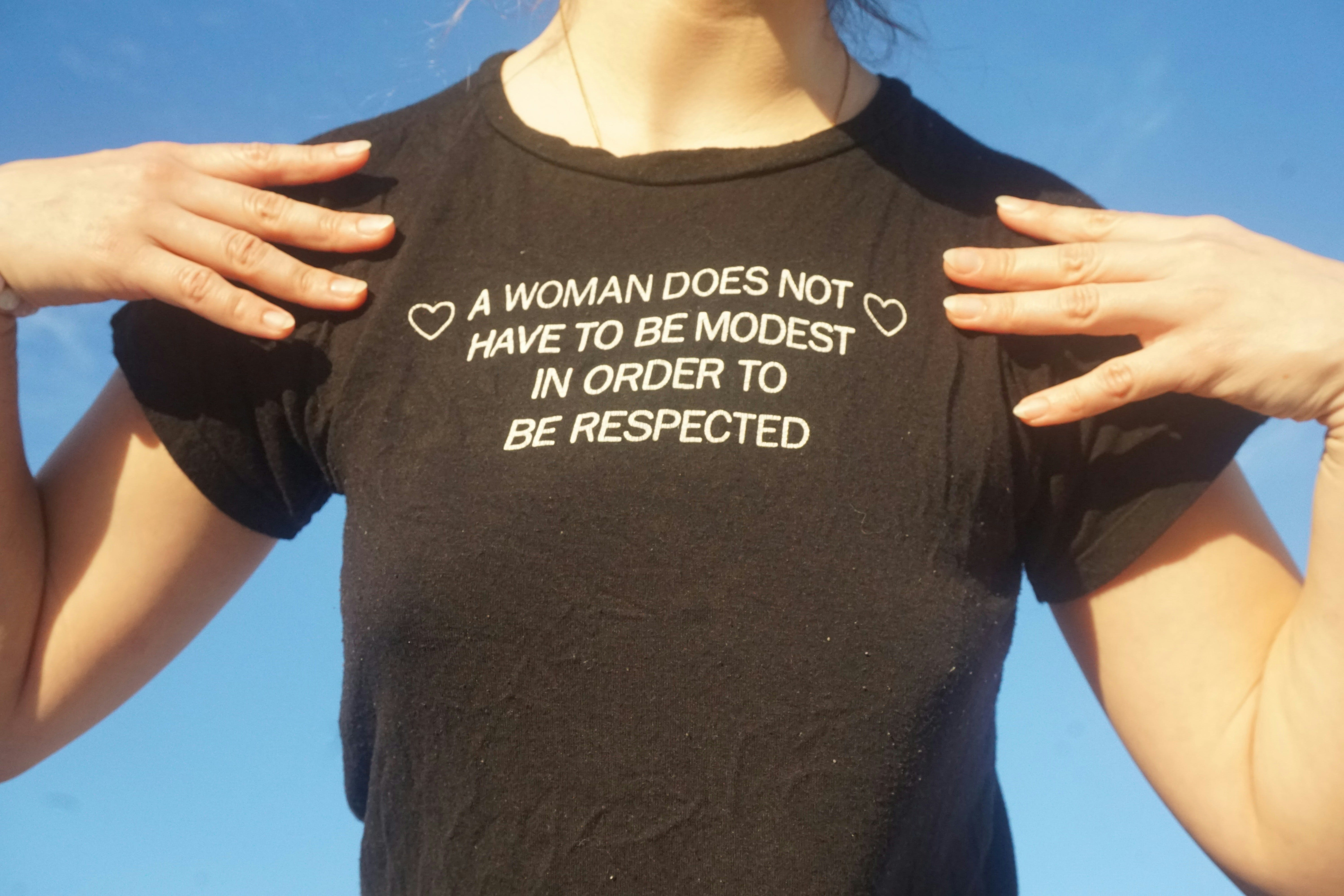
In both media and real life, women are expected to be likable, docile, and servile. (Which, ew.) When we go against the grain, we tend to be dismissed to a word that is rather bland, yet has such strong connotations: unlikable.
Being unlikable is bad because, at the end of the day, don’t we just want to be liked?
Well, yes. But there are things better than being desired.
Buckle up, because this is a long post.
Before I get into this piece, let me give you my definition of an unlikable character.
To me, an unlikable character is one whose thoughts, actions, and moral code fall on the side of complex and even morally gray. She doesn’t align with what society expects of her, and readers can’t always quite access her and figure out why she does the things she does. Thus, she is unlikable, because she is not always understood.
Or, better worded:
They swore, they fucked, they robbed, they killed. They lived fantastic, over-the-top lives and did not apologise for it. When they succeeded, they didn’t downplay their achievements, and they dominated any room they went into. When they fucked up and failed, they owned it and moved forward. They were the centre of their own stories, the drivers of them….
Like the complicated, often contradictory demands of being a woman, being unlikeable implies being both too much of something and not enough of something else. What the “something” is will always vary, mutate, and slip away before being understood, with some other unlikeable quality taking the place of the first one.
The silent implication of being unlikeable is that it’s a free pass to be dismissed, disrespected, and disempowered. If you are deemed unlikeable, you have refused to be a part of the machine of femininity, so you are fair game. You can, and perhaps should, be punished, taught a lesson, put in your place. Unlikeable women – we are told by decades of pop culture – need a valid excuse to be so unlikeable, or else they need to be punished for going against the rules. Only a woman’s intense suffering can justify her unlikeability.
— An excerpt from Unlikeable Female Characters: The Women Pop Culture Wants You to Hate by Anna Bogutskaya
Where we tip into “unlikable” territory is, I feel, when a character’s flaws outweigh their strengths, and when said flaws tend to be maladaptive. For example, in Ninth House by Leigh Bardugo, Alex Stern stands up for her friends, is smart enough to (mostly) keep up with her fellow Yale undergrads, and doesn’t care about what others think of her. She also has a history with drug use, is a murderer2, and doesn’t care about what others think of her.
Alex Stern captivated me immediately because she was given a second chance in life after her trauma—a second chance that came with all the power, privilege, and complications that Yale University brings. Because of a dark past that we find out about later on in the story, Alex is rough around the edges, and doesn’t always act in ways that we, the readers, consider palatable or even necessary.
But what she does is always interesting. Her actions captivate the reader. That’s why I would follow her from hell3 and back. Alex Stern’s mind may not be a pretty place, but it sure is fascinating to see what’s going on up there.


When men are written as complex, acerbic characters, they are often deemed “heroic” and “relatable.” When women are written the same way, we are deemed “unlikable” and “shrews.” This is an unfair comparison that isn’t really a comparison at all—it’s an extension of the rest of the misogyny that women experience. And if that woman is a BIPOC character? Forget it. Just go home. Let’s all go home.
There’s a link between unlikability and character backstory. Here’s the key point: many unlikable characters are traumatized, and their unlikability stems from the ways they process and deal with their trauma.
Trauma tends to make people…difficult. When I was in the depths of unpacking my own childhood and adolescent trauma, I was not cooperative. I was angry. I didn’t want to talk to even my closest friends about what was happening at home. To this day, my former classmates are surprised to learn that I was homeless during a large chunk of middle and high school.

I would like to introduce the following quote from an interview with the brilliant courtney summers, who has written some damn fine (and horrible) characters across multiple YA fiction books.
I think people are quick to label complex, difficult, challenging female protagonists as unlikeable. So far, I think I’ve had success with readers liking my unlikeable female protagonists and, if they like them, are they actually unlikeable? On the one hand, they don’t make likeable choices, but I don’t think they’re inherently unlikeable. They’re pushing against expectations and standards we have for girls. We often encourage girls to be nice, to defer to others at the expense of themselves, to not hurt anyone’s feelings even if it means hurting their own. As soon as a girl resists that, she’s considered wrong or bad, but it’s just human. I’m always going to write girls like that because girls are complex, difficult, challenging, rewarding, and amazing.
Parker [from Cracked Up to Be] went through hell, so when people ask, couldn’t she have been a little nicer, it’s like: no, she couldn’t. She doesn’t care what you think of her and her priority shouldn’t be your opinion, she’s just trying to survive. Girls who are trying to survive are at the heart of my books. They’re going through intense trauma, so why should their focus be outward? There’s a complete lack of grace that we extend to girls who are going through difficult times, girls who can only focus on what’s in front of them and not what’s around them because they’re just trying to get through the next minute.
— Courtney Summers & Sara Grochowski, “Q & A with Courtney Summers,” Aug 16, 2018
This quote from Summers really strikes at the heart of what I’m tryin to say here. Surviving trauma is enough of a task on its own—societal expectations of niceness and palatability ratchet up the stakes.
Now, does trauma excuse you from being a rude person or, for lack of a more pertinent word, a bitch? No. We do owe people basic kindness and respect and empathy, but the thing is…emotional management is quite difficult when you’re under duress. When your own nervous system is attacking itself from within, how can you think about others?
You should. Of course you should. But sometimes, you just…can’t, an experience described as emotional dysregulation. Emotional regulation is a set of learned skills that we use to manage the (often strong!) emotions of ourselves in a psychological and social context.
As described by Bunford, Evans, and Wymbs (2015) “emotion dysregulation [emphasis mine] is an individual’s inability to exercise any or all aspects of the modulatory processes involved in emotion regulation, to such a degree that the inability results in the individual functioning meaningfully below his or her baseline.”
The standard emotional baseline, so to speak, is “choosing responses that align with our goals and values” (Brough and Brackett, 2025). In most social situations, our goal is to cooperate with and help others. When emotional dysregulation takes root, however, all bets are off.
Emotional dysregulation occurs not just with trauma, but with neurodivergence as well. The Bunford, et al. paper that I linked to studied children and adolescents with ADHD; it was found that, at the time, more interventions for social functioning were needed. It was also found in a separate study that individuals who experienced developmental trauma tend to have more emotion dysregulation issues than those who didn’t.
The point of this is that there’s a scientific reason why your characters are considered unlikable: trauma and neurodivergence can literally, biologically render you to be unlikable!
Trauma is a bitch, isn’t it?
a very select list of my favorite books with so-called unlikable women who actually I love a lot
Note: links to Bookshop.org are affiliate links, and, if you purchase using my link, I will receive a small commission from the sale.
Article: Unlikeable Female Characters and The Monstrous-Feminine by Morgan Warneke
Unlikeable Female Characters: The Women Pop Culture Wants You to Hate by Anna Bogutskaya
Interview with the author from The Quietus
Golden Boys Beware by Hannah Capin (I mean, I liked Jade, which says too much about me)
The Favorites by Layne Fargo (KAT DESERVED BETTER)
Boring Asian Female by Canwen Xu (Elizabeth is a MESS and spoke to my academic overachiever heart)
Never Saw Me Coming by Vera Kurian (again: what does it say about me that Chloe is my fave and I was rooting for her the whole time)
I’m the Girl by courtney summers (Georgia is deemed not likable because of her naivete but hello????? she’s a teenager?????????)
Reliquary by Hannah Whitten (Claire please go to therapy or something love u tho)
Immaculate Conception by Ling Ling Huang (I mean this in the BEST way possible…what tf was going on in this book)
Kill Creatures by rory power (I mean…all of Rory’s characters are kinda terrible. That is a compliment)
The Girls Are All So Nice Here by Laurie Elizabeth Flynn (some of the most horrible people I’ve had the pleasure of reading about)
Ninth House by Leigh Bardugo (Alex Stern you are my baby and you deserve the world)
Yesteryear by caro claire burke (I…do not think that Natalie Heller Mills has any likable personality traits.)
My Dark Vanessa by Kate Elizabeth Russell (a prime example of “she’s OBVIOUSLY TRAUMATIZED”)
Thank you for visiting Version CTRL, your destination for honest, slightly acerbic essays for creatives about writing, publishing, mental health, and pop culture. To receive new posts and support my work, consider becoming a free or paid subscriber.
Was she real? Yes. Has she been bastardized in fiction to the point of fictionalization, to the point where most people barely know her real personality? Yeah.
If you consider that a spoiler this book has been out for SEVEN YEARS, people. Plus I didn’t give details. But this is a Leigh Bardugo book. IDK what you expected!!!!
teehee
Love these thoughts—when we reduce humans down to "do we like them or not", we're willfully closing off the possibility of understanding their humanity fully.
🤌